Long-term interest free finance (the kind advertised in stores as “12 months interest free”) lets you take something home today and pay it off over a set period without paying any interest during that time. It is one of the ways people spread the cost of a bigger purchase without dipping into their savings, and it is widely offered at retailers across NZ.
Whether this is your first time considering interest free or you have used it before and want a clearer understanding, this guide covers: fees, the minimum payment, the interest rate at the end, and a real example to show the total cost of a purchase.
In this article:
- What is long-term interest free finance?
- How does interest free finance work on a credit card in New Zealand?
- Will I end up with a credit card?
- Why can retailers offer 0% p.a. interest?
- What fees apply to an interest free finance credit card?
- What happens at the end of the interest free period?
- A real example: a $1,500 fridge on 12 months interest free
- Interest free finance vs buy now pay later: a quick comparison
- Frequently asked questions
What is long-term interest free finance?
Long-term interest free finance lets you spread the cost of an eligible purchase over a set period (commonly 6, 12, 24, 36 or 60 months) without paying any interest during that time.
Generally, after that period ends, anything still owing starts getting charged interest at the standard purchase rate. You will see it most often at retailers selling bigger-ticket items: appliances, furniture, electronics, beds, tools, bikes, sports gear, and increasingly for services too, like home heating and air conditioning, dental work and travel.
“12 months interest free”, “24 months interest free on purchases over $999”: those are the offers we are talking about. In NZ it is covered by the Credit Contracts and Consumer Finance Act 2003 (CCCFA), so the lender has to check the finance is suitable and affordable for you before approving it.
How does interest free finance work on a credit card in New Zealand?
Generally, three parties are involved in every long-term interest free deal: you, the retailer, and the lender. The usual flow looks like this:
- You pick out what you want at a participating retailer. Different lenders have different retailer networks - you will find interest free deals at retailers like Noel Leeming, PB Tech, Big Save and Mag and Turbo, among others.
- If you already have a card that has an interest free feature, the retailer can set up the plan for you if you have enough available credit. If you don't have a card or want to extend your credit limit for a new purchase, you can apply in store or online. The application usually takes a few minutes.
- The purchase sits on your card as its own interest free balance, with a defined term (often 6, 12, 24, 36 or 60 months).
- You'll need to make at least the minimum monthly payment from there.
- Before the interest free period ends, you repay the balance, and because you have, no interest is charged.
If any remaining balance from that purchase is left unpaid, it rolls onto the card’s standard purchase rate. That is the thing to plan around, and we will come back to it.
Will I end up with a credit card?
With long-term interest free finance, usually yes. Interest free finance is typically a feature of a credit or store card: you get a card with a credit limit.
Here is how it works: once you’ve applied and been approved for a credit card, the lender issues you a card with a credit limit. Your interest free purchase sits on that card as its own balance, with its own 0% p.a. term and an interest free end date. The same card works as a normal credit or store card for other spending and stays with you even after the interest free purchase is paid off.
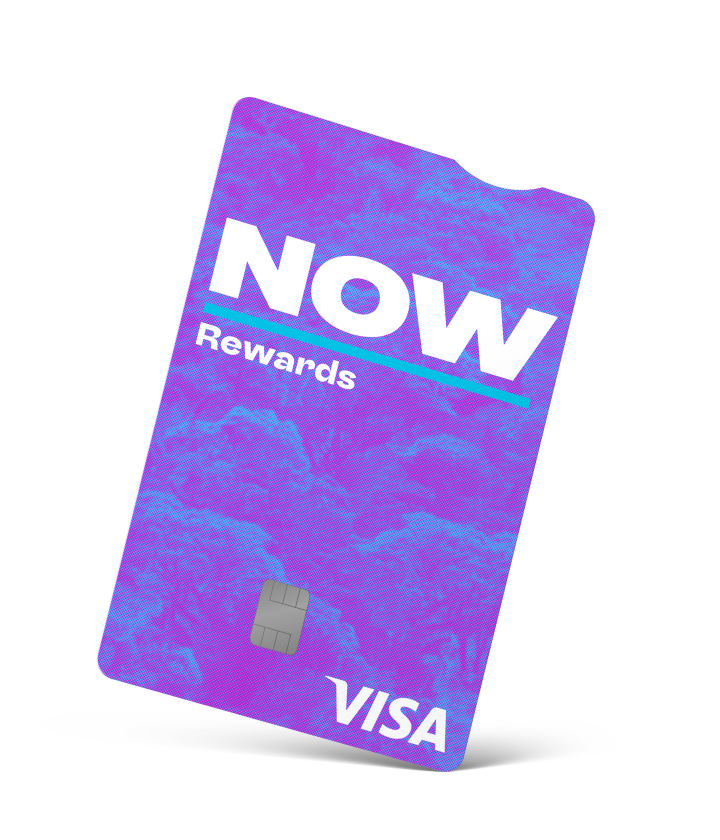
You do not have to use the card for anything else, but you can, and many people do. With the NOW Rewards Visa, for instance, you can apply for the card directly from the Finance Now website (before any purchase) and use it day to day like any other credit card, with the long-term interest free finance feature there when you need it.
Why can retailers offer 0% p.a. interest?
It is a fair question: how can a retailer afford to offer 12 months at 0% p.a.?
The answer is that long-term interest free finance is typically made possible through an agreement between the retailer and the finance provider. When a retailer advertises an offer such as 12 months interest free on a $1,500 fridge, the retailer covers the cost of offering that interest free term. It comes at a cost to the retailer, but it can help make larger purchases more affordable for customers.
What fees apply to an interest free finance credit card?
A credit card with long-term interest free finance usually charges a one-off establishment fee (charged when the account is opened), an ongoing account fee, and a late payment fee if you miss a minimum payment. Some lenders also charge a fee every time you make a new long-term interest free purchase (sometimes called an advance fee).
Credit cards with an interest free feature aren’t fee free. But that’s fine, as long as you know what you are paying for. The structure varies by lender, but most interest free credit cards in NZ combine some of these:
- A one-off establishment fee charged when the account is opened.
- An ongoing account fee - usually charged annually or every six months - for as long as you hold the card.
- A late payment fee if you miss a minimum payment.
- After the initial interest free transaction, some finance providers charge a fee every time you take up a new interest free offer.
Think of the account fee like a subscription. It is a flat cost for holding the card and what comes with it: access to the interest free retailer network, any rewards, fraud prevention and security measures, the app. And like any subscription, it is better value the more you use it. A $50–$80 account fee is a small share of a year of regular household card spending.
If the card mostly sits in a drawer and is only used for occasional one-off purchases, the same fee can feel much more expensive on a per use basis.
What happens at the end of the interest free period?
On the day after the term ends, any amount still owing on that purchase starts attracting interest at the card’s standard purchase rate.
This is the part worth planning for. Your minimum payment is usually 3% of the outstanding balance each month, recalculated as the balance comes down (if your balance drops under $20, you simply pay the amount owing in full). On a $1,500 balance, your first minimum payment is about $45. If you only ever paid the minimum, you’d repay around $559 over 12 months, leaving about $1,073 still owing when the interest free period ends, which is when the standard purchase rate kicks in. This example is for illustrative purposes and doesn’t include any account fees, establishment fees, late payment fees or extra purchases on the card; it’s just to show how the minimum payment itself works.
The fix is simple: work it out at the start. Divide the purchase by the number of interest free months and set up an automatic payment for that amount on the day after pay-day. The minimum is a floor, not a plan.
A real example: a $1,500 fridge on 12 months interest free
To make the maths concrete, here is what the fee side looks like using a real NZ card (NOW Rewards Visa by Finance Now) as the example. Say you want to buy a fridge from Noel Leeming using the 12 months interest free offer.
New cardholder, paying it off on time
To repay $1,500 over 12 months, that is $125 a month. Across the year:
- Fridge: $1,500
- One-off establishment fee (new cardholder): $55
- Account fees over the year ($34 x 2): $68 total
- Interest: $0
- Total cost in year one: $1,623
That is $123 in fees on top of the $1,500 purchase price: $55 for the establishment fee and $68 for account fees. The establishment fee is a one-off. It doesn’t come back next year, and it doesn’t come back on any future interest free purchase on the same card. The fees are added to your card balance like any other spend and added to your minimum payment due that month.
A note on the $125 figure: it’s an average, not a fixed amount every month. Three of the 12 months will be a bit higher, because a fee lands on top of the usual payment: about $180 in the month the $55 establishment fee is charged, and about $159 in each of the two months the $34 account fee is charged. The other nine months stay at $125.
Already have the card
If NOW Rewards Visa card is already in your wallet from an earlier purchase, you’ve already paid the establishment fee. So using the same example as above, if you buy a $1,500 fridge and repay it over 12 months, the total cost in the first year would be $1,568.
That’s $68 in fees instead of $123. Your regular monthly payment remains $125, with two months increasing to around $159 when the account fee is charged
Interest free finance vs buy now pay later – a quick comparison
Both let you spread a cost. They are not the same product, and they tend to suit different situations:
| Long-term interest free | Buy now pay later | |
|---|---|---|
| Typical purchase size |
$250 – $10,000+ |
Under $1,500 |
| Payment period | 6 – 60 months | 6 weeks |
| Interest | 0% p.a. during term; standard rate after | 0% p.a. if paid on time |
| Repayments | Minimum monthly payment required (usually 3% of balance, recalculated monthly) | Fixed fortnightly instalments (25% of purchase) |
| Fees | Establishment + account fee | Late fees only |
| Credit check | Yes | Yes |
If a long-term interest free balance isn’t repaid by the end of the term, the remaining amount starts getting charged interest at the standard purchase rate. If a BNPL instalment is missed, you’re charged a late fee instead of interest.
For a deeper dive, see our companion piece on interest free finance vs buy now pay later.
Frequently asked questions
No. Long-term interest free finance is a longer-term form of credit (months to years) for bigger purchases, with fees and a standard interest rate if anything is left at the end. Buy now pay later is shorter (typically six weeks), smaller, and charges late fees rather than interest.
Yes. Applying for a credit card with an interest free feature involves a credit check. Once you’re approved, the credit limit and your repayment history sit on your credit file. Paying on time can help your score; missed payments can hurt it.
All good. You can repay an interest free balance any time before the end date with no penalty. You have just used less of the interest free period than you planned. If you’re using the card for other spending too, check how extra payments are applied: on some cards, payment hierarchy rules mean anything above the minimum goes to the highest-interest balance first, not necessarily the interest free one.
Only at participating retailers. Different lenders have different retailer networks, so you’ll find interest free at retailers like Noel Leeming, The Warehouse, PB Tech and Big Save, and it is increasingly available for services too, like home heating and air conditioning, dental work and travel. Each lender’s website is the best place to check the current list.
It varies by retailer and promotion, but $250–$500 is common across NZ. Some retailer promotions go higher (for example, 24 or 36 months interest free with minimum spends of $999 or $2,000). Some cards like NOW Rewards Visa automatically apply 12 months interest free on eligible spend above $250 at participating retailers.
There is a late payment fee and the missed payment may be reported to credit reporting agencies. If you know in advance that a payment is going to be tough, talk to your lender: hardship support is available. Finance Now’s hardship line is 0800 654 377.
Yes. It is covered by the Credit Contracts and Consumer Finance Act (CCCFA). Lenders have to check the finance is suitable and affordable before approving it.
Because long-term interest free finance is a feature of a credit or store card. Before you take up an interest free deal, you would have applied and been approved for a credit or store card, the lender then issues you a card and your purchase sits on it as a 0% p.a. balance. The card is yours to keep and works as a normal credit or store card for other spending.
Payment allocation rules vary by lender. On some cards, payments go to the highest-interest balance first; on others, the order is different. If you are using the card for both interest free purchases and everyday spending, check the card’s terms and conditions on how payments are applied, since it can make a difference to how quickly each balance clears.
No. Long-term interest free finance is only offered by certain cards that have retailer-network agreements: the NOW Rewards Visa, Q Mastercard, Gem Visa and similar. For the wider question of how to compare cards, see our guide to choosing a credit card in NZ in 2026.
If your application is conditionally approved, it means we need additional information from you before we finalise your application. You will receive an email from us telling you what you need to complete your application and how to do this.
The information on this website is provided for general information only. Finance Now does not assume any responsibility for giving legal or other professional advice and disclaims any liability arising from the use of the information. If you require legal or other expert advice you should seek assistance from a professional adviser.
About Finance Now
Finance Now is a 100% Kiwi-owned consumer lender, trusted by more than 530,000 New Zealanders. If the NOW Rewards Visa sounds like it might suit, you can find the full rates, fees and how to apply on our product pages. NOW Rewards Visa is issued by SBS Money Limited, which is wholly owned by Finance Now Limited.