Interest free finance and buy now pay later (BNPL) both let you take something home and pay for it over time without paying interest. They look pretty similar at the till. But they are not the same product, and the situations they suit are different.
If you have been using buy now pay later for a while and are starting to think about bigger purchases, or you are just wondering which option makes more sense for different situations, this guide walks through how they compare.
In this article:
- BNPL vs long-term interest free finance: the 30-second answer
- What is buy now pay later?
- What is long-term interest free finance?
- Side-by-side: long-term interest free finance vs BNPL
- Does buy now pay later affect your credit score in New Zealand
- What will each option actually cost?
- A real example: the same $1,500 purchase, two ways
- What else comes with the card?
- Things to watch with each product
- Frequently asked questions
A note: when we say “interest free finance” here, we mean the long-term kind: 6, 12, 24, 36 or 60 months at 0% p.a. at participating retailers, offered on cards like NOW Rewards Visa, Q Mastercard and Gem Visa. That is different from the interest free days most credit cards offer if you pay your balance in full each month.
BNPL vs long-term interest free finance: the 30-second answer
Smaller purchase you can pay in six weeks? BNPL is one option people use. Bigger purchase you want to pay off over several months: appliances, furniture, beds, tools? Long-term interest free finance is often used here, because it gives a longer runway (6 to 60 months) at 0% p.a. The material differences are about credit checks, fees, what happens if you don’t pay on time, how each shows up on your credit file, and what else comes with the card. The rest of this guide walks through them, with an example at the end.
What is buy now pay later?
Buy now pay later splits a purchase into four equal fortnightly payments over about six weeks, at 0% p.a. interest if you pay on time. The main BNPL providers operating in NZ are Afterpay, and Klarna. BNPL is built for smaller purchases: clothing, beauty, homewares, gifts, typically under $1,500. If you miss a payment, you will be charged a late fee. Long-term interest free finance starts from as low as $250 and goes much higher, so for smaller purchases you may have a choice between the two, and for anything bigger, interest free finance is typically the option available.
What is long-term interest finance?
Long-term interest free finance gives you a credit limit and a defined 0% p.a. term (commonly 6, 12, 24, 36 or 60 months) on each purchase at a participating retailer.
NZ cards include NOW Rewards Visa, Q Mastercard and Gem Visa. If a balance is left over at the end of the term, it reverts to the card’s standard purchase interest rate (commonly in the mid-to-high 20 per cent range per year, or p.a.). There are usually fees: a one-off establishment fee and an ongoing account fee.
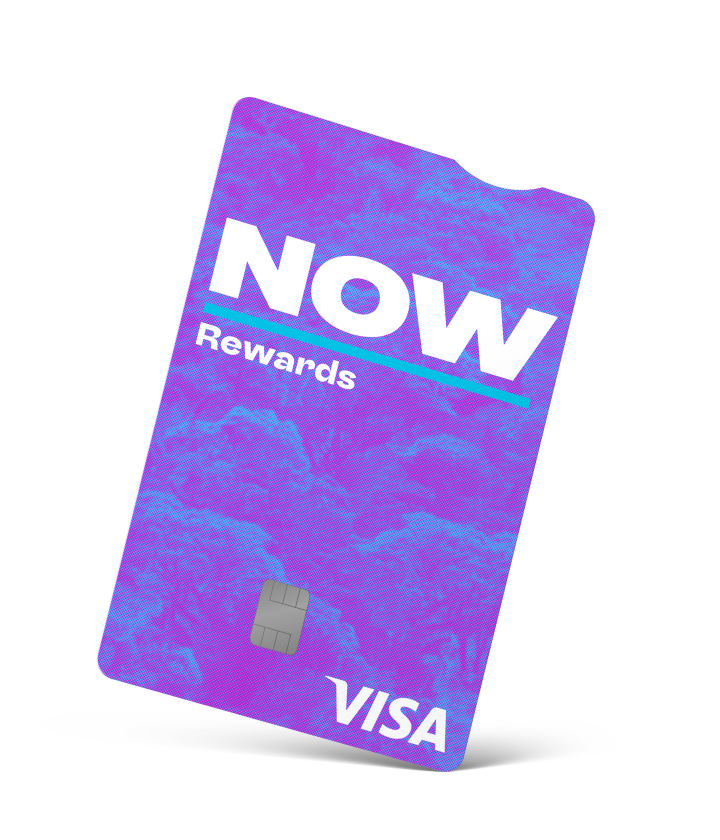
Some long-term interest free products are bundled into a card that also works as a normal credit card for everyday spending. The NOW Rewards Visa is one example: a standard Visa credit card you can apply for directly and use for day-to-day purchases, plus automatic 12 months interest free on single transactions of $250 or more at Noel Leeming, The Warehouse and Warehouse Stationery (offer valid through 31 March 2027; check the latest terms on the Finance Now website).
For a deeper look at how it works, see our explainer on how interest free finance works.
Side-by-side: long-term interest free finance vs BNPL
| Long-term interest free | BNPL (e.g. Afterpay) | |
|---|---|---|
| Purchase size |
$250 – $10,000+ |
Under $1,500 |
| Payment period | 6 – 60 months | About 6 weeks (4 instalments) |
| Interest | 0% p.a. during term; standard rate after | 0% p.a. if paid on time |
| Repayments | Minimum monthly payment required (usually 3% of the balance, recalculated montly) | Fixed fortnightly instalments (25% of purchase) |
| Fees | Establishment + account fee | Late fees only (no upfront fees) |
| Credit check | Yes – always | Yes – since September 2024 |
| On your credit file | Yes | Yes – since September 2024 |
| Where you can use it | Participating retailers (e.g. Noel Leeming, The Warehouse, PB Tech, Big Save) | Online and in store where BNPL is accepted |
| Best suited for | Bigger-ticket items you want months to pay off | Smaller purchases you can clear in weeks |
| What else you get | A full credit card for everyday use, rewards, fraud prevention and security measures, digital wallet | – |
If a long-term interest free balance isn’t repaid by the end of the interest term, the remaining amount starts getting charged interest at the standard purchase interest rate. If a BNPL instalment is missed, you’re charged a late fee instead of interest.
Does buy now pay later affect your credit score in New Zealand?
Yes. Since September 2024, when new regulations brought BNPL under the Credit Contracts and Consumer Finance Act (CCCFA, the law that governs lending in NZ), BNPL providers have had to run credit checks and report credit information to credit bureaus.
This used to be the biggest difference between BNPL and other credit products, and it has narrowed, but it isn’t identical. BNPL providers now run credit checks and report to credit bureaus, but they aren’t required to assess affordability in exactly the same way a credit card provider is.
Long-term interest free finance has always required a full credit check, and it has always shown up on your credit file. The practical effect in 2026: both products are visible on your credit file, both can help your score if you pay on time, and both can hurt it if you miss payments.
What will each option actually cost?
It depends on the size of the purchase and how quickly you can pay it off.
For a smaller purchase you can pay in six weeks, BNPL is hard to beat on cost. No establishment fee, no account fee, no interest if you pay on time.
For a bigger purchase you want to pay off over several months, the long runway at 0% p.a. does the work. The fixed fees on the card are small compared with the purchase, and they also cover a card you can use all year round.
A real example: the same $1,500 purchase, two ways
To show how this plays out in dollars, the long-term interest free figures below use the Finance Now NOW Rewards Visa as the example. The BNPL figures use Afterpay because it is the most widely known NZ provider.
Option A - Afterpay over 6 weeks
Afterpay’s spending limit depends on the customer and the retailer: it starts lower for new customers and can rise over time with a good repayment history. For this example, we’ll assume the limit covers the $1,500 fridge. You would pay four instalments of $375, each a fortnight apart, so the full amount is repaid in about six weeks from the purchase date. If you don’t miss a payment, you pay exactly $1,500: no fees, no interest. The question is whether the household budget can absorb $375 a fortnight for six weeks.
Option B - Long-term interest free finance over 12 months
Spread over 12 months, the same $1,500 is $125 a month. Unlike BNPL, your statement won’t split this into instalments; it just shows a minimum payment due, so it’s up to you to pay the $125 each month if you want it repaid in 12 months.
On the NOW Rewards Visa, the fees look like this:
- Account fee: $34 every six months ($68 for the year)
- Establishment fee: $55 one-off, only if this is your first interest free purchase on a new card
Total cost for a new cardholder in year one: $1,623. That’s $123 in fees on top of the purchase price.
The $125 a month is an average, not fixed. Three months run higher because a fee lands in that month: about $180 the month the establishment fee is charged, and about $159 in each of the two months the account fee is charged.
Already have a NOW Rewards Visa? You’re just looking at $68 in account fees for the year.
Which is cheaper?
In pure dollar terms, Option A costs $0 on top of the $1,500 if you pay on time. Option B costs $68 in account fees (existing cardholder) or $123 (new cardholder) in year one. The trade-off is cashflow: A wants the money back in weeks; B spreads it across a year.
These are estimates to show how the two options compare. They don’t include every fee that could apply – like a late payment fee if a payment’s missed, interest charges if the balance isn’t cleared in time, or costs from other purchases on the card.
What else comes with the card?
The comparison above looks at costs and repayment terms. But that is only part of the picture. BNPL and a card with long-term interest free finance give you very different things day to day.
With BNPL, you get one thing: a way to split a single purchase into fortnightly payments.
With a card like NOW Rewards Visa, the interest free finance is one feature of a card you can use for everything. In between interest free purchases, the card sits in your digital wallet and works like any other credit card: tap-and-go at the supermarket, online shopping, filling up the car. Along the way, you are earning rewards on that everyday spending (1 NOW Dollar per $150 of eligible spend, redeemable at certain retailers like Noel Leeming, The Warehouse and PB Tech), and you have fraud prevention and security measures, and an NZ-based support team to help.
So, when you look at the account fee on a credit card that offers interest free finance, it is worth remembering what that fee covers – it is not just the cost of one interest free purchase. It is the cost of having a card you can use all year round, with the interest free network there whenever you need it.
Things to watch with each product
Things to watch with BNPL
- Stacking multiple BNPL purchases at the same time. Each has its own fortnightly schedule; the combined repayments can quickly outpace cashflow.
- Using BNPL for essentials repeatedly. If the same six-week splits keep recurring on groceries or petrol, that is a sign the budget needs a closer look.
- Forgetting the fortnightly timing. The pay-day a fortnight from now might not line up with the BNPL due date.
- Overestimating short-term cashflow. A $1,500 BNPL purchase is $375 a fortnight for six weeks - that is a real impact on the household budget.
Things to watch with long-term interest free finance
- Paying only the minimum. The minimum won't repay the balance within the interest free period. Set a fixed automatic payment that divides the purchase evenly across the interest free months.
- Losing track of the expiry date. Diarise the day the interest free period ends: that is the day the standard purchase interest rate kicks in on anything still owing on the purchase.
- Not keeping the total picture in view. You can have more than one interest free balance running at once, just make sure the combined monthly payments fit comfortably within your budget.
We cover all of this in more detail in our explainer on how interest free finance works.
This guide is general information, not personal advice. The right call depends on your own situation.
Frequently asked questions
Both can help your credit score if you pay on time, and both can hurt it if you don’t. Neither is inherently better: what matters is whether the repayment plan fits your budget.
Yes. Since September 2024, when new regulations brought BNPL under the CCCFA, Afterpay and other BNPL providers in NZ run credit checks and report credit information to credit bureaus.
No. Standard credit card interest free days mean no interest is charged on purchases if you pay the full closing balance by the payment due date each month, and they are a feature of most credit cards. Long-term interest free finance is a separate arrangement: a defined 0% p.a. term of months to years on a specific purchase at a participating retailer, with its own minimum payment and an end date.
You can, but think about the total picture before you do. Every credit product shows up on your credit file, and every monthly or fortnightly payment is competing for the same household budget.
Talk to your lender as early as you can. NZ lenders are required to consider hardship applications under the CCCFA. There may be options to restructure payments or pause them for a short period. Finance Now’s hardship line is 0800 654 377.
See our guide to choosing a credit card in NZ in 2026: it covers the seven things worth comparing (interest rate, fees, rewards, interest free periods, digital wallet support, fraud protection, customer service), the main types of card available in NZ, and a two-question quiz to narrow down which kind of card might suit.
The information on this website is provided for general information only. Finance Now does not assume any responsibility for giving legal or other professional advice and disclaims any liability arising from the use of the information. If you require legal or other expert advice you should seek assistance from a professional adviser.
About Finance Now
Finance Now is a 100% Kiwi-owned consumer lender, trusted by more than 530,000 New Zealanders. If the NOW Rewards Visa sounds like it might suit, you can find the full rates, fees and how to apply on our product pages. NOW Rewards Visa is issued by SBS Money Limited, which is wholly owned by Finance Now Limited.