Whether you are looking for your first credit card or rethinking the one in your wallet, this guide is designed to help you compare what is out there in 2026.
Most credit card buying guides in NZ cover the same three things: interest rates, fees, and rewards. They are the headlines, but they are not the whole picture. How the card helps protect you from fraud, how easy it is to get hold of support when something goes wrong, and what the card lets you do at the checkout: they all matter too.
This guide covers the main types of card available in NZ, the seven things worth comparing, what people often overlook, and a short quiz to narrow it down. There is a glossary at the end if any terms feel new.
First: how do you use a credit card?
Before you start comparing cards, work out which kind of cardholder you are. The same card can be brilliant for one person and a poor fit for another.
There are two broad patterns:
- Transactor: You use the card for everyday spending and repay the balance in full every month. You almost never pay interest. What tends to matter more is rewards, interest free terms on bigger purchases, and the everyday experience of using the card.
- Revolver: You carry a balance from month to month. The interest rate matters a lot: it is the single biggest cost you will pay. Low-rate cards tend to fit this pattern better.
Not sure which you are? Look at your last six credit card statements. Did you repay the balance every month? You are a transactor. Did a balance roll over? You are a revolver, at least for now.
New to credit cards? You don’t have a pattern yet, so think about how you plan to use the card. If you intend to pay it off in full each month, be a transactor from the start. Building the habit early (paying the full balance, keeping well within your limit) can help build a healthy credit history.
The main types of credit card in NZ
Credit cards in NZ fall into a handful of broad categories. Some pick one card that fits how they spend, others hold more than one. Either way, it helps to know the categories:
- Low-rate cards. Built for people who carry a balance. Lower purchase interest rates (broadly under 15% p.a.), often a smaller or no annual fee. The Kiwibank Zero, ANZ Low Rate Visa and TSB Low Rate Mastercard are examples.
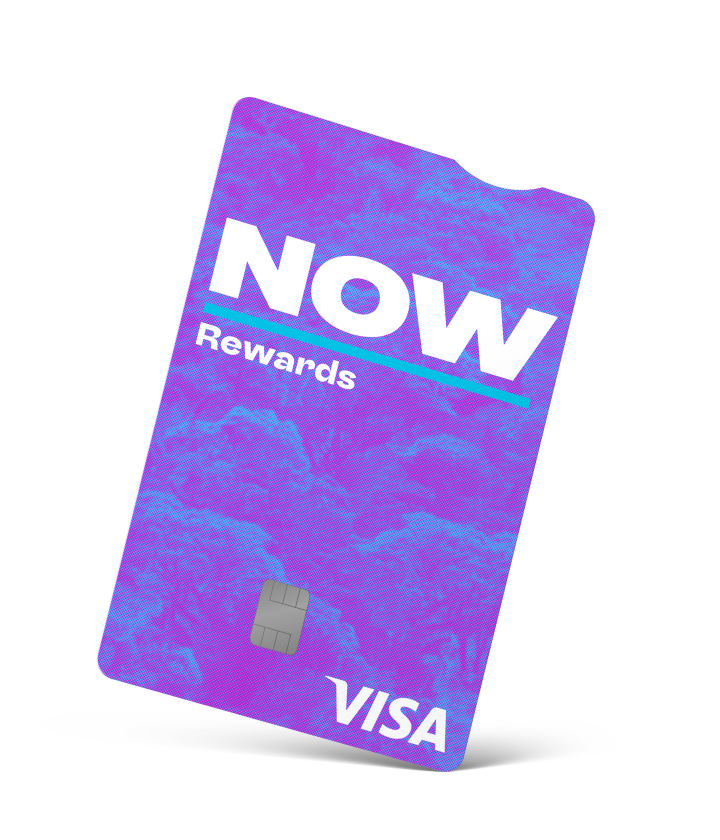
- Rewards cards (cashback or store credit). Earn rewards redeemable at participating retailers or as a credit on the account. NOW Rewards Visa is one example in NZ: 1 NOW Dollar per $150 of eligible spend, redeemable at certain retailers like Noel Leeming, The Warehouse and PB Tech.
- Rewards cards (Airpoints). Earn Airpoints Dollars per dollar spent, redeemable for flights on Air New Zealand and partners. Purchase interest rates and annual fees vary by issuer, typically mid-range to high. Best value if you fly often. Mainstream bank Airpoints cards and the AMEX Airpoints range are examples.
- Interest-free finance card. Offer long-term interest free periods (6, 12, 24, 36 or 60 months) on bigger purchases at participating retailers, alongside the standard credit card features. NOW Rewards Visa, Q Mastercard, Gem Visa are NZ examples.
- No-fee cards. No annual or monthly account fee. Rates and rewards vary by provider, so it's worth checking the actual purchase interest rate rather than assuming a no-fee card costs less to carry a balance on. The Westpac Fee Free Mastercard and SBS Visa Credit Card are examples.
- Travel cards. Designed for overseas use: lower or no foreign-currency transaction fees, and some include travel insurance. Fees and rates vary by provider, so weigh the savings on international transactions and annual cost against how often you travel
Some cards combine more than one type, like a rewards card that also has a strong long-term interest free network, such as NOW Rewards Visa. So treat these categories as a guide to what is out there, rather than fixed boxes every card fits neatly into.
The 7-point credit card checklist for 2026
Seven things to compare when you are choosing a card in NZ in 2026.
- Interest rates (the purchase interest rate, and the cash advance rate)
- Fees (account fee - annual/6-monthly, establishment, advance, late, cash advance, overseas)
- Rewards programme (earn rate, what and where you can redeem)
- Interest free periods (for e.g. up to 55 days interest free on everyday purchases, and any long-term interest free offers)
- Digital wallet support
- Fraud protection (disputes, in-app card freeze)
- Customer service (response times, hardship support, how easy it is to reach support)
1. Interest rate
Purchase interest rates in NZ in 2026 run from around 11.95% p.a. at the low-rate end to about 29.49% p.a. at the rewards-card end.
The purchase interest rate is the most-quoted number on any credit card. It’s the rate you’ll pay on any balance carried into the next month. Repay the balance every month and you will rarely pay it, so it matters less. Carry a balance even occasionally and it matters. A $2,000 balance at 26.65% p.a. costs about $44 a month in interest. The same balance at 13.95% p.a. costs about $23.
Two things people often miss: the cash advance rate (the rate you pay when you withdraw cash on your credit card) is higher than the standard purchase rate on most cards, commonly around 29% p.a., and cash advances accrue interest from day one. There is no interest free period on cash. These figures are illustrative only; check your card’s specific rates.
2. Fees
Card fees come in a few shapes. Worth looking at all of them, not just the headline:
- Account fee: ranges from $0 to $195+ in NZ depending on the card.
- Late payment fee: typically $10–$15.
- Cash advance fee: a small per-transaction fee, plus the higher cash advance interest rate from day one.
- Overseas transaction fee: commonly around 2% of the transaction, applied to anything in a foreign currency, including purchases on international websites, not just spending while you're overseas. Travel cards often waive or reduce this.
- For interest-free finance cards specifically: some charge a one-off establishment fee when the account is opened. Some lenders also add a per-transaction advance fee (often around $35) on each new interest free purchase. Some don't. Check the specific card's fee structure before signing up.
An account fee is what you pay for access to the card and everything that comes with it: the interest free retailer network, rewards, fraud prevention, the app. The more you use the card, the better value that fee becomes. If you put $5,000 a year through the card, a $68 annual fee works out at about $1.30 for every $100 of spending.
3. Rewards programme
NZ rewards programmes split into two main camps: travel (Airpoints) and cashback or store credit. Two things to look at: how much you earn per dollar, and what the rewards are worth at redemption. A high earn rate isn’t useful if the redemption value is low.
For example: the NOW Rewards Visa earns 1 NOW Dollar per $150 of eligible spend, and 1 NOW Dollar = $1 NZ at participating retailers. A household spending $5,000 a month on eligible everyday Visa spend ends up with about $400 in NOW Dollars over a year. One thing to know: NOW Dollars are earned on everyday Visa transactions, but they aren’t earned on cash advances, balance transfers, long-term interest free transactions, fees or interest.
4. Interest free periods
“Interest free” means two different things on a credit card, and it is worth being clear about which is which:
- Standard purchase interest free days: if you pay the full closing balance by the payment due date each month, not just the minimum, there is no interest to pay on the purchases in that cycle. Most NZ credit cards work this way.
- Long-term in store interest free: specific offers (6, 12, 24, 36 or 60 months) on bigger-ticket purchases at participating retailers. Different lenders have different retailer networks.
5. Digital wallet support
Most people pay using a digital wallet at least some of the time now, so the card you can load into your digital wallet is the one you’ll reach for.
Worth a quick check before you sign up: does the card support Google Pay, Apple Pay, Garmin Pay or Samsung Pay? NOW Rewards Visa, for example, currently supports Google Pay, with Apple Pay on the way.
6. Fraud protection
Most NZ-issued credit cards protect you from unauthorised transactions, so if someone else uses your card without your knowledge or agreement, you may be covered, as long as you didn’t act fraudulently or negligently (for example, sharing your PIN, ignoring an obvious scam warning or authorising the transaction) and you report it promptly, within the timeframe set out in the card’s terms and conditions.
In practice, fraud prevention itself isn’t the differentiator: most cards offer some form of it. What varies is how each provider implements it, and how easy they make it to respond when something goes wrong. Look for:
- The ability to lock or freeze your card in the app the moment you suspect it's lost or compromised; some providers can also cancel or replace the card from within the app, others need a phone call.
- Clear instructions on how to raise a dispute if something's wrong.
- Fast access to a temporary card or a replacement.
- How the provider monitors for unusual activity, whether that's real-time alerts you can see yourself, or fraud monitoring running in the background.
For a closer look at fraud protection across payment types, see our guide on whether it’s safer to pay by credit, debit or EFTPOS in NZ.
7. Customer service
You don’t notice customer service when everything is going well. You notice it the day you need help. Worth checking:
- Is there an NZ phone number you can call, with hours that suit you?
- Is there a dedicated hardship line if you can't make a payment?
- Is the support team NZ-based?
- How quickly does the issuer respond to disputes?
- What do reviews on Google or Consumer NZ say about the issuer's service?
Worth checking before you sign up
- Picking on the rewards alone. If you carry a balance, the interest cost usually wipes out the rewards. The interest rate matters more than the points programme for revolvers.
- Picking on the interest rate alone if you pay in full. If you repay the balance every month, the interest rate is academic. Rewards, interest free periods and the everyday experience matter more.
- Look at the cash advance rate. It is usually higher than the purchase rate and accrues interest from day one. If you would ever use the card for cash, this matters.
- Forgetting to check the digital wallet. A card you can't load into Google Pay or Apple Pay on your phone is a card you will use less.
- Not asking about hardship support. You hope you never need it. Worth knowing where to find the number before you do.
Two-question quiz: which kind of card might suit
Use this to narrow your shortlist in about 30 seconds. This isn’t personal advice, just a way to focus the comparison.
Question 1: Do you clear the balance in full every month?
- Yes - focus on rewards, interest free periods, and the everyday experience of using the card. The interest rate matters less.
- No - focus on the interest rate first. A low-rate card can save you more on interest than a rewards card earns in points, depending on how much of a balance you typically carry.
Question 2: Are you likely to make a bigger purchase in the next year or two – like an appliance, furniture, or electronics?
- Yes - look at cards that offer long-term interest free at the retailers you'd shop at, like Noel Leeming, The Warehouse, PB Tech or Big Save, plus rewards you would actually use.
- Not really - a card with a strong general rewards programme or a low annual fee tends to suit everyday spending better.
The right card depends on how you live and spend, and on the trade-offs you are most comfortable with.
Frequently asked questions
There is not one. The best card depends on how you use it. A low-rate card often suits someone who carries a balance. A rewards card with strong in store interest free can suit someone who repays the balance every month and makes occasional bigger purchases at major retailers. The two-question quiz above narrows it down.
In 2026, purchase rates under about 15% p.a. are considered low. Mid-range cards sit around 19–22% p.a. Rewards and store-specific cards typically run 24–29.49% p.a. The right rate for you depends on whether you carry a balance; if you don’t, the rate matters less.
It depends on how you use credit. If you carry a balance most months, the interest you save with a low-rate card will often exceed the rewards a rewards card would earn. If you repay the balance in full every month, a rewards card can pay for its annual fee several times over, provided you would genuinely use the rewards. Some people are best served by a mix, depending on the purchase.
The headline annual or six-monthly account fee, the late payment fee, the cash advance rate and fee, and the overseas transaction fee. For interest free finance cards, also check whether there is a one-off establishment fee at sign-up, and whether the finance provider charges a fee every time you take up a new interest free offer.
It depends on the card. On NOW Rewards Visa, no: NOW Dollars are earned on eligible everyday Visa spend, not on long-term interest free transactions. Other cards may treat this differently, so check the rewards programme T&Cs for the specific card.
Yes. Cards that offer long-term interest free finance (like NOW Rewards Visa, Q Mastercard and Gem Visa) are full credit or store cards. The long-term interest free finance is one feature of the card; it also works as a normal card for everyday spending, and you can apply for these cards directly, not only through a retailer.
In most cases, yes. Most NZ-issued credit cards protect you from unauthorised transactions, as long as you didn’t act fraudulently or negligently (for example, sharing your PIN or ignoring an obvious scam warning) and you report it promptly, within the timeframe set out in the card’s terms and conditions. Most cards have an in-app freeze you can use the moment you suspect something: the faster you flag it, the more straightforward the process.
Applying for a credit card triggers a credit check that shows up on your file. The card itself, your credit limit and your repayment history are all visible. Paying on time and keeping your balance well under your limit can support a healthy credit score; missed or late payments can impact it.
Yes. NOW Rewards Visa is one NZ example: it offers long-term interest free at participating retailers, plus NOW Dollars on eligible everyday spend (1 NOW Dollar per $150). Just note NOW Dollars aren’t earned on the interest free purchases, only on everyday spending.
Glossary
A quick reference for the terms used above.
The interest rate the card charges on standard purchases if you don’t pay the full closing balance by the payment due date each month.
The interest rate the card charges when you withdraw cash from an ATM, bank, or other source using your credit card. Usually higher than the purchase rate and accrues from day one. There is no interest free period on cash.
The window between when you make a purchase and when the payment is due, during which no interest accrues, provided you pay the full closing balance by the payment due date each month. Most NZ credit cards offer this.
A specific arrangement on a credit or store card that lets you pay off a single bigger-ticket purchase over a set number of months (6, 12, 24, 36, 60) at 0% p.a. interest, at participating retailers. After the term ends, any remaining balance reverts to the standard purchase rate.
A one-off fee charged when the account is opened or when you make your first transaction. Not all cards charge one.
An ongoing fee charged for holding the card, annually or every six months. Sometimes called an annual fee.
A per-transaction fee that some lenders charge on each long-term interest free purchase, often around $35. Not all do. Check the specific card.
Another name for the standard purchase rate: it is the rate that “reverts” on an interest free balance at the end of the interest free term.
A policy from your card issuer meaning you are not held responsible for unauthorised transactions on your card, provided you have taken reasonable care of your card and PIN and report the issue promptly.
A process where you query a credit card transaction (for example, goods not delivered, or a payment you didn’t authorise) and ask your card issuer to reverse it.
The information on this website is provided for general information only. Finance Now does not assume any responsibility for giving legal or other professional advice and disclaims any liability arising from the use of the information. If you require legal or other expert advice you should seek assistance from a professional adviser.
About Finance Now
Finance Now is a 100% Kiwi-owned consumer lender, trusted by more than 530,000 New Zealanders. If the NOW Rewards Visa sounds like it might suit, you can find the full rates, fees and how to apply on our product pages. NOW Rewards Visa is issued by SBS Money Limited, which is wholly owned by Finance Now Limited.