How to add your credit card to Google Wallet in NZ

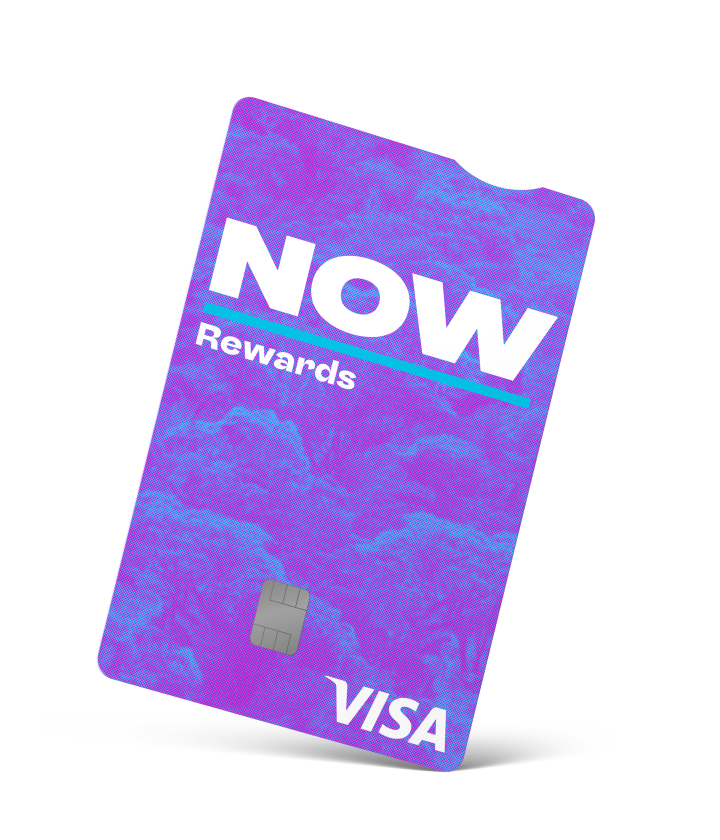
Google Pay is the tap-to-pay wallet built into Android phones. Load your NOW Rewards Visa onto it once, and you can pay with your phone in store, online and in apps, with no card to reach for.

Paying by phone works just like the card: you still earn NOW Dollars, and you still get the automatic 12 months interest free at Noel Leeming, The Warehouse and Warehouse Stationery. Here’s how to set it up.

How do I add my NOW Rewards Visa to Google Wallet?

Here’s the step-by-step:

    1. Download the Google Wallet app from the Google Play Store. Most Android phones have it already.
    2. Open the app and tap “Add to Wallet”, then “Payment card”.
    3. Use your phone camera to scan your card, or type in the card number, expiry date and security code by hand.
    4. Follow the prompts to complete the details and tap “Save” to confirm that you agree to the Google Terms and Conditions.
    5. Read and accept the NOW Rewards Visa Google Pay Terms and Conditions.
    6. Verify it’s you. You may get a one-off code by text or email to confirm.
    7. Once you’re verified, your card shows in Google Wallet and you’re ready to tap.

Good to know: we’re working on letting you add your card straight from the eMoney app as soon as you’re approved, without needing the card in your hand. We’ll update this guide when that’s live.  

And while only main cardholders have the eMoney app, additional cardholders can still add their card to their phone’s wallet.   

Coming soon: Apple Pay

Do I still earn NOW Dollars when I pay by phone?

Yes. Paying with your phone is the same as paying with the card, so you still earn NOW Dollars on eligible spend, and the automatic 12 months interest free on eligible purchases at participating retailers still applies.

Why use Google Pay?

Because your phone is usually in your hand already. You can leave the card at home, and there’s nothing to dig out of your wallet at the checkout — it’s quick,secure and one less thing to carry.

Where can I use Google Pay in NZ?

Anywhere you see the contactless (tap-to-pay) symbol: supermarkets, petrol stations, cafes and most shops, plus online and in any app that shows Google Pay at the checkout.

It works overseas too, at any terminal that takes contactless payments. And if you have a smartwatch, you can add your card there and pay from your wrist.

Is it safe to keep my card on my phone?

Yes, and in some ways it’s safer than carrying the physical card. When you pay, Google Pay doesn’t give the shop your real card number; it uses a unique device number instead, and every payment is protected by your phone’s PIN, fingerprint or face unlock.

If your phone goes missing, your card details aren’t sitting on it in a usable form, and you can lock or wipe the phone remotely using Google’s Find Hub (formerly Find My Device). If you report your NOW Rewards Visa lost or stolen and we block it, the digital copy in your wallet is blocked too.

What happens to my wallet if my card is replaced

If your card is reissued, the digital copy in your wallet will be updated. However, if fraud is detected or you report fraudulent activity and request the card to be blocked, you won’t be able to use the card in the wallet until you receive the replacement card and you update your wallet with the new card details.

Troubleshooting: common issues

Frequently asked questions

For now, yes. You scan or type in the card details to add it. We’re working on letting you add it straight from the eMoney app as soon as you’re approved.

No. It’s the same as paying with your card.

Yes, anywhere contactless payments are accepted.

Use Google’s Find Hub to lock or wipe it. Your card details aren’t stored on the phone in a usable form. If you’re worried your card has been compromised, contact us straight away.

Yes, on their own phone, with their own card.

Digital wallet support is one of the things worth checking when you pick a card. See our guide to choosing a credit card in NZ in 2026.

The information on this website is provided for general information only. Finance Now does not assume any responsibility for giving legal or other professional advice and disclaims any liability arising from the use of the information. If you require legal or other expert advice you should seek assistance from a professional adviser.

About Finance Now

Finance Now is a 100% Kiwi-owned consumer lender, trusted by more than 530,000 New Zealanders. If the NOW Rewards Visa sounds like it might suit, you can find the full rates, fees and how to apply on our product pages. NOW Rewards Visa is issued by SBS Money Limited, which is wholly owned by Finance Now Limited.

Share this article

Facebook
LinkedIn

Is it safer to pay by credit, debit or EFTPOS in NZ?

Most of us have more than one way to pay: a credit card, a debit card or an EFTPOS card. While they look similar at the checkout, they offer different protections if something goes wrong. 

So, what is the safest way to pay in NZ: credit, debit or EFTPOS?

In short:

  • For in-person spending, EFTPOS, debit and credit are all secure when used correctly.
  • The differences show up online and overseas. EFTPOS is built for in-person payments in New Zealand, while credit and debit cards work online and overseas, and let you raise a dispute if a purchase goes wrong.
  • A credit card may have a slight edge: depending on your card issuer, you may not need to pay a disputed transaction while it’s being investigated. However, it may still reduce your available credit until the dispute is resolved.

How credit, debit, and EFTPOS differ

It comes down to two things: where the money comes from, and which network the payment runs on. A debit or EFTPOS card spends money from your account; a credit card borrows it, up to a limit you pay back later. EFTPOS runs on New Zealand’s own in-person network, so the card is not set up for online shopping and is not widely accepted by overseas merchants. Some EFTPOS cards can still withdraw cash at overseas ATMs, but Visa and Mastercard cards are the ones that work everywhere: online, overseas and in person.

Payment type  Money comes from Where it works Can you raise a dispute?
Credit card (Visa or Mastercard) Borrowed, up to your limit In store, online, overseas Yes
Debit card (Visa or Mastercard Your account In store, online, overseas Yes
EFTPOS card Your account In store in NZ, with your PIN Generally, no


Which payment method is safest from fraud in NZ?

For in-person payments, EFTPOS has less exposure to online fraud because it needs your physical card and PIN. Its main risk is physical: a skimmed card or a PIN watched over your shoulder.

Visa and Mastercard cards work in far more places – online, overseas and contactless – and they come with protection built in. Online purchases get an extra layer of checking, called Visa Secure or Mastercard Identity Check, that confirms it is really you. Paying through a digital wallet adds another layer: the merchant receives a token, not your actual card details.

Worth knowing: in NZ, contactless payments up to $200 per transaction may not need a PIN. A different limit can apply overseas, where you may be asked to enter your PIN or sign. If you do lose your card, make sure you report it immediately.

What protection do I have if something goes wrong?

If a purchase goes wrong, whether that’s goods that never arrive, something faulty or a business that closes, a debit card or a credit card lets you raise a dispute. This is where your card issuer tries to reverse the charge through the Visa or Mastercard network. You have up to 120 days to make a claim, though this varies by provider. Many people don’t realise this option exists: a Consumer NZ survey found nearly half of New Zealanders did not know they could dispute a card payment.

An EFTPOS payment (cheque or savings) doesn’t use the Visa or Mastercard networks, so it doesn’t have the same option. Recovery is more limited and usually handled directly with your bank or the merchant.

If a payment is made without your knowledge or agreement, you may be covered, whichever card it is, as long as you report it promptly and didn’t act fraudulently or negligently. Being careful means keeping your PIN and passwords to yourself, not sharing one-off codes, and not ignoring obvious scam warnings.

There can also be a difference between credit and debit. Depending on your card issuer, you may not need to pay a disputed credit card transaction while it’s being investigated, although it may still reduce your available credit. With a debit or EFTPOS card, the money has already left your account, and you generally need to wait for any refund or dispute outcome.

How to keep your card safe day to day

Protection like this works best when you do your bit too. A few everyday habits go a long way:

If you have NOW Rewards Visa

The points above apply to any card. A few specifics for the NOW Rewards Visa:

Frequently asked questions

Both offer the same dispute rights through the Visa or Mastercard network, so for online purchases they are similarly protected. The bigger gap is with EFTPOS, which doesn’t have the same dispute option.

If you paid with a Visa or Mastercard debit or credit card, you can raise a dispute, and your card issuer will try to reverse the charge. You have up to 120 days, though this varies by provider.

Contact your card issuer as soon as you notice it so the card can be blocked, then report any transactions you do not recognise. You may be covered, as long as you did not act fraudulently or negligently and you report it promptly.

Yes. A digital wallet gives the merchant a token rather than your real card number, and each payment is protected by your phone’s PIN, fingerprint or face unlock.

Not quite. EFTPOS doesn’t run on the Visa or Mastercard networks, so it does not have the same dispute option. Recovery is usually handled directly with your bank or the merchant.

Glossary

A quick reference for the terms used above.

The interest rate the card charges on standard purchases if you don’t pay the full closing balance by the payment due date each month.

A payment made without your knowledge or agreement, such as one made with stolen card details.

Paying by holding your card or phone near the payment terminal, without inserting the card or, for smaller amounts, entering a PIN.

New Zealand’s domestic in-person payment network, used with a physical card and PIN. It doesn’t run on the Visa or Mastercard networks.

Which should you use?

There is no single “safest” way to pay. EFTPOS, debit and credit cards are all secure when used properly. The key difference is that credit and debit cards add protections for online purchases and disputed transactions, while EFTPOS is designed for secure in-person payments.

For more on picking the right card, see our guide to choosing a credit card in NZ in 2026. For paying securely with your phone, see our guide to adding your card to Google Wallet.

The information on this website is provided for general information only. Finance Now does not assume any responsibility for giving legal or other professional advice and disclaims any liability arising from the use of the information. If you require legal or other expert advice you should seek assistance from a professional adviser.

About Finance Now

Finance Now is a 100% Kiwi-owned consumer lender, trusted by more than 530,000 New Zealanders. If the NOW Rewards Visa sounds like it might suit, you can find the full rates, fees and how to apply on our product pages. NOW Rewards Visa is issued by SBS Money Limited, which is wholly owned by Finance Now Limited.

Share this article

Facebook
LinkedIn

Are rewards credit cards worth it? How to choose one that suits you

A rewards credit card (“rewards card”) gives you something back on the spending you already do, usually as points, cashback or dollars you can use later.

Whether you already have a rewards card or you’re weighing one up, this guide covers what makes a rewards card worth it and what to look for when you compare them.

We use NOW Rewards Visa as the example, but the thinking applies generally to credit cards with a rewards programme.

How do rewards credit cards work in New Zealand?

A rewards card earns you something back on everyday spending, but it only comes out ahead if the card does not cost you more than it gives. Three things decide that:

Rewards cards have shifted in New Zealand lately. It is worth checking what a card still offers before you choose.

What should you look for in a rewards card?

Comparing rewards cards comes down to a few practical questions:

Can a rewards card also offer interest free finance?

Rewards are one thing a card can give you. Long-term interest free finance is another. Not every card offers both.

That combination is the idea behind NOW Rewards Visa. You earn NOW Dollars on eligible everyday Visa spend, and at participating retailers you can spread a larger purchase over a long-term interest free plan. There is also automatic 12 months interest free on single purchases of $250 or more at Noel Leeming, The Warehouse and Warehouse Stationery, with nothing extra to set up.

So, the same card that chips away at the weekly shop can also turn a new fridge or a set of tyres into predictable payments, which matters more when budgets are tight.

For how these plans work, see our guide to how interest free finance works, and for weighing up a bigger buy, our guide to paying for a big purchase.

How do NOW Rewards Visa NOW Dollars work?

You earn 1 NOW Dollar for every $150 you spend on eligible purchases, and 1 NOW Dollar is worth NZ$1 to spend at redemption partners. You earn anywhere Visa is accepted, in store or online, including bills you put on the card such as power, water, broadband, mobile and rates. A few things do not earn:

Earn NOW Dollars  Doesn’t earn NOW Dollars
Everyday Visa spending (groceries, petrol, online) Cash advances and balance transfers
Power, water, broadband, mobile and rates Long-term interest free plans you apply for
Most other everyday Visa purchases Fees, interest, NOW Dollars redemption

When you shop at a participating retailer, you (the main cardholder) will get a text offering to put your NOW Dollars towards that purchase. A minimum spend applies, and saying yes uses your whole balance at once, so it is worth saving them for something you really want.

You can let your NOW Dollars build up rather than spending them straight away. That makes them handy for saving towards a bigger spend, like Christmas presents or back-to-school costs. Both the main cardholder and any additional cardholder earn, and all the NOW Dollars sit in the main cardholder’s account.

You can see the full detail of how to use the rewards and where you can redeem on the NOW Rewards Visa page.

How much could I earn in a year?

Say a household puts about $3,000 a month of everyday spending and bills through the card. Over a year that builds up like this. (This is an illustration; your own depends on what you spend.)

Over a year  Amount
Eligible spend on the card ($3,000 a month) $36,000
NOW Dollars earned 240
What they’re worth at certain participating retailers  $240

The maths is simple: every $150 of eligible spend earns 1 NOW Dollar, so divide your yearly card spend by 150. Long-term interest free finance you apply for does not earn, so it is not counted here.

What else should I know about NOW Rewards Visa?

Frequently asked questions

There isn’t one best card for everyone. The best rewards card for you is the one whose rewards match what you already spend on, whose account fee is worth what you get back, and whose extras you will use. Work through the points above, then compare a couple of cards on those terms.

Yes. The NOW Rewards Visa earns NOW Dollars on everyday Visa spend, and at participating retailers you can spread a larger purchase over a long-term interest free plan.

It depends. On a single eligible purchase of $250 or more at Noel Leeming, The Warehouse or Warehouse Stationery, the automatic 12 months interest free purchase will earn NOW Dollars. Long-term interest free plans you apply for at a retailer do not.

They do not currently expire, so you can save them up for something bigger.

New to credit cards, or weighing up which one suits? See our guide to choosing a credit card in NZ in 2026. And for keeping your card and payments safe, see our guide to paying safely by credit, debit or EFTPOS.

The information on this website is provided for general information only. Finance Now does not assume any responsibility for giving legal or other professional advice and disclaims any liability arising from the use of the information. If you require legal or other expert advice you should seek assistance from a professional adviser.

About Finance Now

Finance Now is a 100% Kiwi-owned consumer lender, trusted by more than 530,000 New Zealanders. If the NOW Rewards Visa sounds like it might suit, you can find the full rates, fees and how to apply on our product pages. NOW Rewards Visa is issued by SBS Money Limited, which is wholly owned by Finance Now Limited.

Share this article

Facebook
LinkedIn

How to choose a credit card in NZ in 2026

Whether you are looking for your first credit card or rethinking the one in your wallet, this guide is designed to help you compare what is out there in 2026.

Most credit card buying guides in NZ cover the same three things: interest rates, fees, and rewards. They are the headlines, but they are not the whole picture. How the card helps protect you from fraud, how easy it is to get hold of support when something goes wrong, and what the card lets you do at the checkout: they all matter too.

This guide covers the main types of card available in NZ, the seven things worth comparing, what people often overlook, and a short quiz to narrow it down. There is a glossary at the end if any terms feel new.

First: how do you use a credit card?

Before you start comparing cards, work out which kind of cardholder you are. The same card can be brilliant for one person and a poor fit for another.

There are two broad patterns:

Not sure which you are? Look at your last six credit card statements. Did you repay the balance every month? You are a transactor. Did a balance roll over? You are a revolver, at least for now.

New to credit cards? You don’t have a pattern yet, so think about how you plan to use the card. If you intend to pay it off in full each month, be a transactor from the start. Building the habit early (paying the full balance, keeping well within your limit) can help build a healthy credit history.

The main types of credit card in NZ

Credit cards in NZ fall into a handful of broad categories. Some pick one card that fits how they spend, others hold more than one. Either way, it helps to know the categories:

Some cards combine more than one type, like a rewards card that also has a strong long-term interest free network, such as NOW Rewards Visa. So treat these categories as a guide to what is out there, rather than fixed boxes every card fits neatly into.

The 7-point credit card checklist for 2026

Seven things to compare when you are choosing a card in NZ in 2026.

1. Interest rate

Purchase interest rates in NZ in 2026 run from around 11.95% p.a. at the low-rate end to about 29.49% p.a. at the rewards-card end.

The purchase interest rate is the most-quoted number on any credit card. It’s the rate you’ll pay on any balance carried into the next month. Repay the balance every month and you will rarely pay it, so it matters less. Carry a balance even occasionally and it matters. A $2,000 balance at 26.65% p.a. costs about $44 a month in interest. The same balance at 13.95% p.a. costs about $23.

Two things people often miss: the cash advance rate (the rate you pay when you withdraw cash on your credit card) is higher than the standard purchase rate on most cards, commonly around 29% p.a., and cash advances accrue interest from day one. There is no interest free period on cash. These figures are illustrative only; check your card’s specific rates.

2. Fees

Card fees come in a few shapes. Worth looking at all of them, not just the headline:

An account fee is what you pay for access to the card and everything that comes with it: the interest free retailer network, rewards, fraud prevention, the app. The more you use the card, the better value that fee becomes. If you put $5,000 a year through the card, a $68 annual fee works out at about $1.30 for every $100 of spending.

3. Rewards programme

NZ rewards programmes split into two main camps: travel (Airpoints) and cashback or store credit. Two things to look at: how much you earn per dollar, and what the rewards are worth at redemption. A high earn rate isn’t useful if the redemption value is low.

For example: the NOW Rewards Visa earns 1 NOW Dollar per $150 of eligible spend, and 1 NOW Dollar = $1 NZ at participating retailers. A household spending $5,000 a month on eligible everyday Visa spend ends up with about $400 in NOW Dollars over a year. One thing to know: NOW Dollars are earned on everyday Visa transactions, but they aren’t earned on cash advances, balance transfers, long-term interest free transactions, fees or interest.

4. Interest free periods

“Interest free” means two different things on a credit card, and it is worth being clear about which is which:

5. Digital wallet support

Most people pay using a digital wallet at least some of the time now, so the card you can load into your digital wallet is the one you’ll reach for.

Worth a quick check before you sign up: does the card support Google Pay, Apple Pay, Garmin Pay or Samsung Pay? NOW Rewards Visa, for example, currently supports Google Pay, with Apple Pay on the way.

6. Fraud protection

Most NZ-issued credit cards protect you from unauthorised transactions, so if someone else uses your card without your knowledge or agreement, you may be covered, as long as you didn’t act fraudulently or negligently (for example, sharing your PIN, ignoring an obvious scam warning or authorising the transaction) and you report it promptly, within the timeframe set out in the card’s terms and conditions.

In practice, fraud prevention itself isn’t the differentiator: most cards offer some form of it. What varies is how each provider implements it, and how easy they make it to respond when something goes wrong. Look for:

For a closer look at fraud protection across payment types, see our guide on whether it’s safer to pay by credit, debit or EFTPOS in NZ.

7. Customer service

You don’t notice customer service when everything is going well. You notice it the day you need help. Worth checking:

Worth checking before you sign up

Two-question quiz: which kind of card might suit

Use this to narrow your shortlist in about 30 seconds. This isn’t personal advice, just a way to focus the comparison.

Question 1: Do you clear the balance in full every month?

Question 2: Are you likely to make a bigger purchase in the next year or two – like an appliance, furniture, or electronics?

The right card depends on how you live and spend, and on the trade-offs you are most comfortable with.

Frequently asked questions

There is not one. The best card depends on how you use it. A low-rate card often suits someone who carries a balance. A rewards card with strong in store interest free can suit someone who repays the balance every month and makes occasional bigger purchases at major retailers. The two-question quiz above narrows it down.

In 2026, purchase rates under about 15% p.a. are considered low. Mid-range cards sit around 19–22% p.a. Rewards and store-specific cards typically run 24–29.49% p.a. The right rate for you depends on whether you carry a balance; if you don’t, the rate matters less.

It depends on how you use credit. If you carry a balance most months, the interest you save with a low-rate card will often exceed the rewards a rewards card would earn. If you repay the balance in full every month, a rewards card can pay for its annual fee several times over, provided you would genuinely use the rewards. Some people are best served by a mix, depending on the purchase.

The headline annual or six-monthly account fee, the late payment fee, the cash advance rate and fee, and the overseas transaction fee. For interest free finance cards, also check whether there is a one-off establishment fee at sign-up, and whether the finance provider charges a fee every time you take up a new interest free offer.

It depends on the card. On NOW Rewards Visa, no: NOW Dollars are earned on eligible everyday Visa spend, not on long-term interest free transactions. Other cards may treat this differently, so check the rewards programme T&Cs for the specific card.

Yes. Cards that offer long-term interest free finance (like NOW Rewards Visa, Q Mastercard and Gem Visa) are full credit or store cards. The long-term interest free finance is one feature of the card; it also works as a normal card for everyday spending, and you can apply for these cards directly, not only through a retailer.

In most cases, yes. Most NZ-issued credit cards protect you from unauthorised transactions, as long as you didn’t act fraudulently or negligently (for example, sharing your PIN or ignoring an obvious scam warning) and you report it promptly, within the timeframe set out in the card’s terms and conditions. Most cards have an in-app freeze you can use the moment you suspect something: the faster you flag it, the more straightforward the process.

Applying for a credit card triggers a credit check that shows up on your file. The card itself, your credit limit and your repayment history are all visible. Paying on time and keeping your balance well under your limit can support a healthy credit score; missed or late payments can impact it.

Yes. NOW Rewards Visa is one NZ example: it offers long-term interest free at participating retailers, plus NOW Dollars on eligible everyday spend (1 NOW Dollar per $150). Just note NOW Dollars aren’t earned on the interest free purchases, only on everyday spending.

Glossary

A quick reference for the terms used above.

The interest rate the card charges on standard purchases if you don’t pay the full closing balance by the payment due date each month.

The interest rate the card charges when you withdraw cash from an ATM, bank, or other source using your credit card. Usually higher than the purchase rate and accrues from day one. There is no interest free period on cash.

The window between when you make a purchase and when the payment is due, during which no interest accrues, provided you pay the full closing balance by the payment due date each month. Most NZ credit cards offer this.

A specific arrangement on a credit or store card that lets you pay off a single bigger-ticket purchase over a set number of months (6, 12, 24, 36, 60) at 0% p.a. interest, at participating retailers. After the term ends, any remaining balance reverts to the standard purchase rate.

A one-off fee charged when the account is opened or when you make your first transaction. Not all cards charge one.

An ongoing fee charged for holding the card, annually or every six months. Sometimes called an annual fee.

A per-transaction fee that some lenders charge on each long-term interest free purchase, often around $35. Not all do. Check the specific card.

Another name for the standard purchase rate: it is the rate that “reverts” on an interest free balance at the end of the interest free term.

A policy from your card issuer meaning you are not held responsible for unauthorised transactions on your card, provided you have taken reasonable care of your card and PIN and report the issue promptly.

A process where you query a credit card transaction (for example, goods not delivered, or a payment you didn’t authorise) and ask your card issuer to reverse it.

The information on this website is provided for general information only. Finance Now does not assume any responsibility for giving legal or other professional advice and disclaims any liability arising from the use of the information. If you require legal or other expert advice you should seek assistance from a professional adviser.

About Finance Now

Finance Now is a 100% Kiwi-owned consumer lender, trusted by more than 530,000 New Zealanders. If the NOW Rewards Visa sounds like it might suit, you can find the full rates, fees and how to apply on our product pages. NOW Rewards Visa is issued by SBS Money Limited, which is wholly owned by Finance Now Limited.

Log in to the right eMoney portal for you

NOW Rewards Visa

For Main Cardholders of NOW Rewards Visa.

Finance Now logo

Finance Now

For all Finance Now customers looking to access your loan details with us.

Share it with the World